Looking Back, Looking Forward: production overview
Prepared by Kyle Wickline · May 2025 · For Framework and the Wing Luke Museum
About this document
I wrote this production overview for Looking Back, Looking Forward, a community event the Wing Luke Museum held on May 24, 2025. Framework produced it with students from a University of Washington Communication Leadership course led by Sandy Cioffi, which used rapid prototyping to explore storytelling on emerging platforms such as AR, VR, and AI. I was the course’s teaching assistant and, working freelance for Framework, managed the project. In the work plans, “UW” means the course team.
It’s recreated here as a web page, with a few edits for publication:
- Individual names are removed from the work plans, which show which organization owned each task.
- Supplier links and order-status columns are removed, a museum visitor figure is described instead of quoted, and one line about neighborhood conditions is shortened.
- Some wording in the context section is tightened for the web.
- The design brief and the “strengths to build on” point come from earlier planning notes for the same project.
For my role, the team, and how the day went, see the case study.
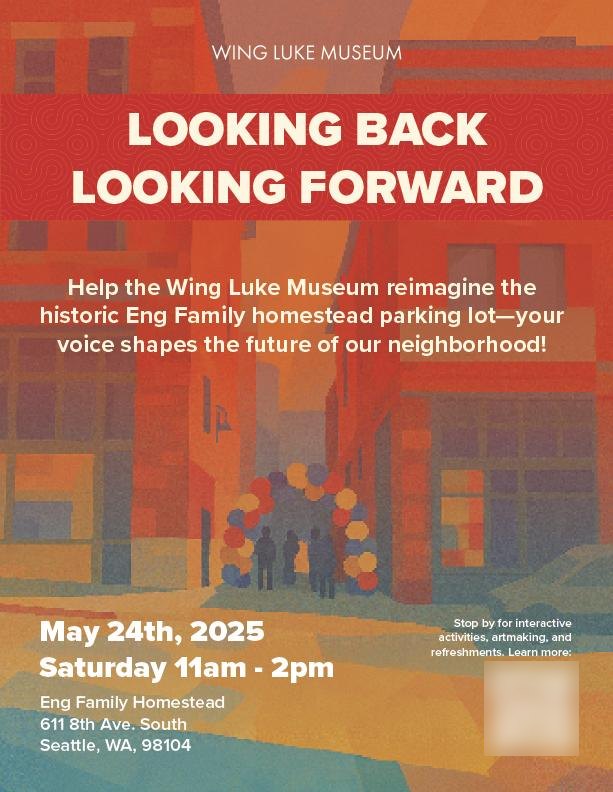
Event overview
- EventLooking Back, Looking Forward
- DateSaturday, May 24, 2025
- Time11 a.m. to 2 p.m.
- LocationCanton Alley and the Eng Family Homestead, 611 8th Ave S, Seattle, WA 98104 (the “opportunity site”)
Context
- Centennial figure, not institution. 2025 is what would have been Wing Luke’s 100th birthday (he was born in 1925). The museum is happy to weave that personal milestone into the storytelling, but the May activation’s primary purpose is to co-create a community vision for the newly acquired opportunity site.
- Eng Family Homestead opportunity site. Wing Luke recently purchased the historic Eng Family Homestead at 611 8th Ave S, a rare single-family residence with an adjoining L-shaped lot that backs onto Canton Alley. The house is being renovated, and the May event is the public’s first chance to imagine how this space, and its alley frontage, could become a multi-use cultural campus.
- The neighborhood. The Chinatown–International District is dealing with visible homelessness and concerns about safety, and many long-time AAPI residents now live in the suburbs. Wing Luke wants the alley to be a safe, festive gathering space again, one that brings long-time residents and newer audiences together.
- Strengths to build on. The museum already runs programming events and food tours, hosts an annual celebration in the alley, and has existing connections with local schools.
Program goals
- Gather community input on how the Eng Homestead and Canton Alley should serve the next generation.
- Engage with the neighborhood and position the Wing Luke Museum as its cultural center-point.
- Attract new audiences, especially families, who are currently a small share of visitors.
- Generate earned media and revenue to support museum operations.
Design brief
What Framework wanted the activations to be:
- Technologically interesting
- Interesting as storytelling
- Exciting enough to attract people to make the drive
- Open to several levels of engagement, perhaps including an online one
- Focused on the future: the museum tells AAPI history, and this should help people envision what the CID and the Wing Luke could look like over the next 100 years
- Built around a bean-planting activity
Two words to design to: “Exciting.” “Attractive.”
Event activations
Each activation below has a guest journey, three engagement levels (good, better, best) so it could be scaled to the time and budget available, staffing, a concept render, a work plan split between Framework and the UW course team, and a supply list.
- Welcome / Story Alley
- Story Booths
- Color the Future
- Tea + Talk
- Sprout the Dream (bean planting)
Style guide
The event’s colors and type, used across signage, decals, and printed pieces.
#75838A#B69037#BDB4A3#8E945E#BF3132#E46B2E
Font: Proxima Nova
1 Welcome / Story Alley
Guest journey
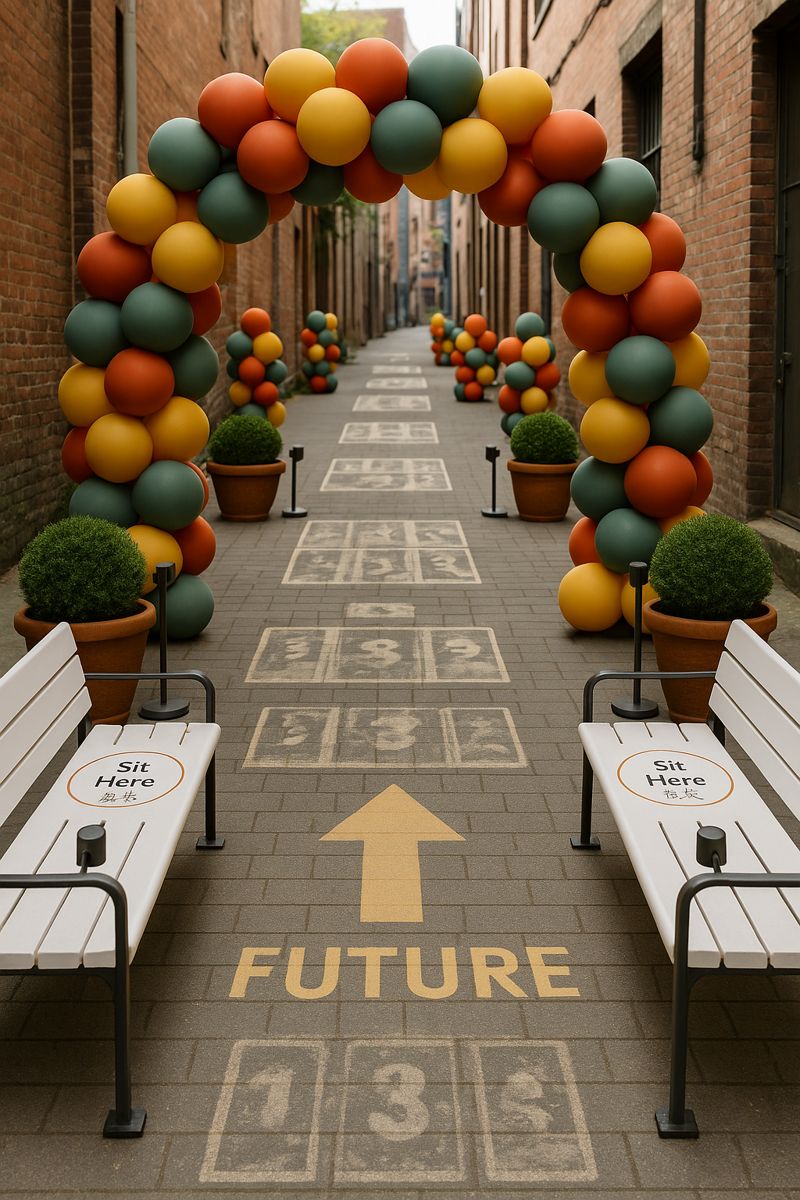
Entering the alley, guests walk through a balloon arch inviting them in. On the ground, they see old photographs painted in chalk, guiding them from the past to the future. As they walk down Canton Alley, they’re invited to sit on white benches and hear stories from the past. Decals on the benches tell guests where to sit, and directional speakers repeat the brief (two- to five-minute) audio stories.
Engagement levels
| Level 1: Good | Level 2: Better | Level 3: Best |
|---|---|---|
|
|
|
Staffing: One or two staff to make sure the tech works, guide participants, and answer questions.
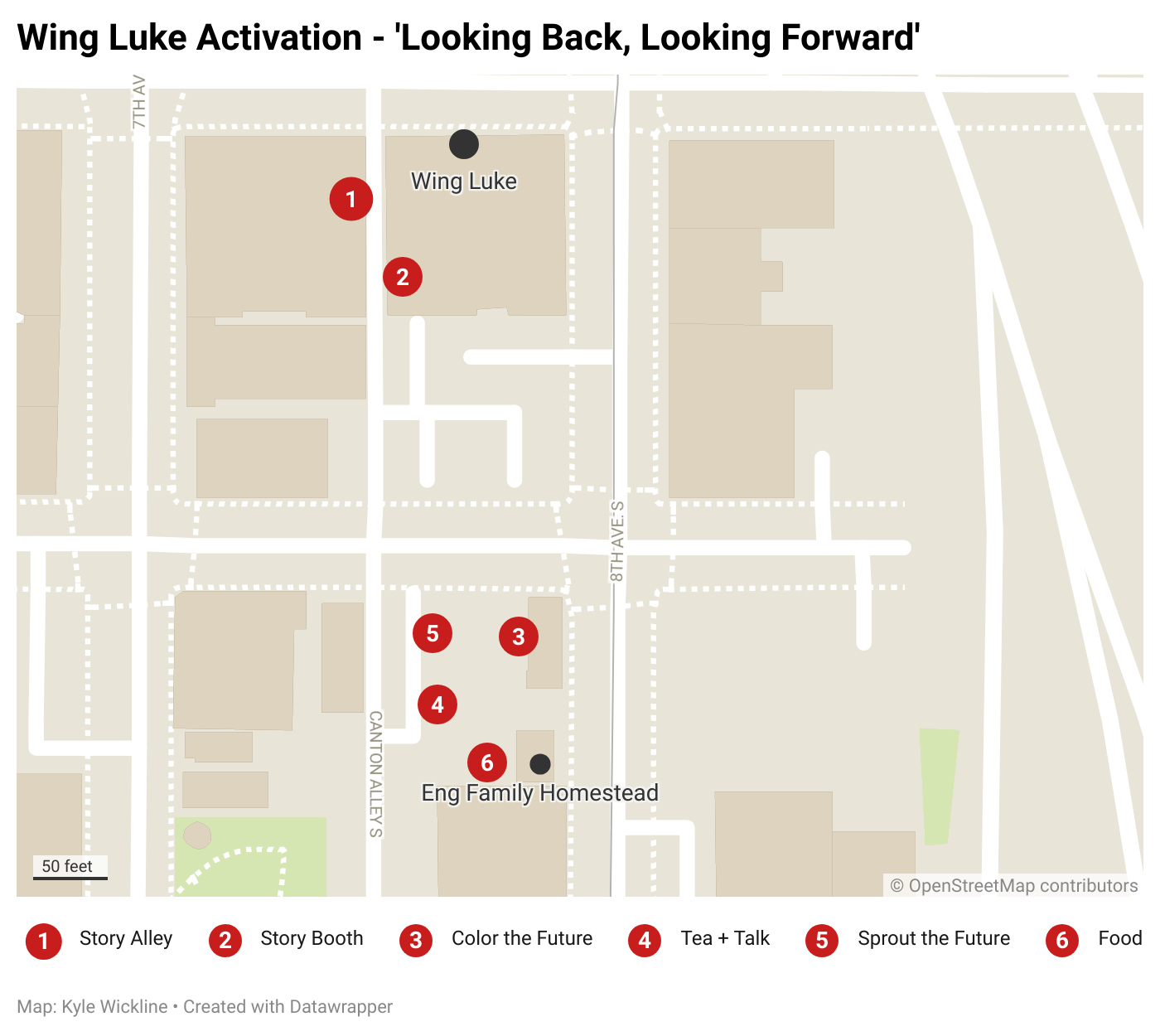
Work plan
| Framework | UW |
|---|---|
|
|
Supplies
- 4 white benches (rental)
- Balloon arch kit (est. $22)
- Balloon pump (est. $16)
- Linograph stencils
- Balloons
- String
- Spray chalk
- 5 planters with flowers
Media assets: audio stories, photos for stencils, graphics for benches.
Note: It would be good to have the stories printed on the bench decals, so it still works if the tech fails.
2 Story Booths
Guest journey
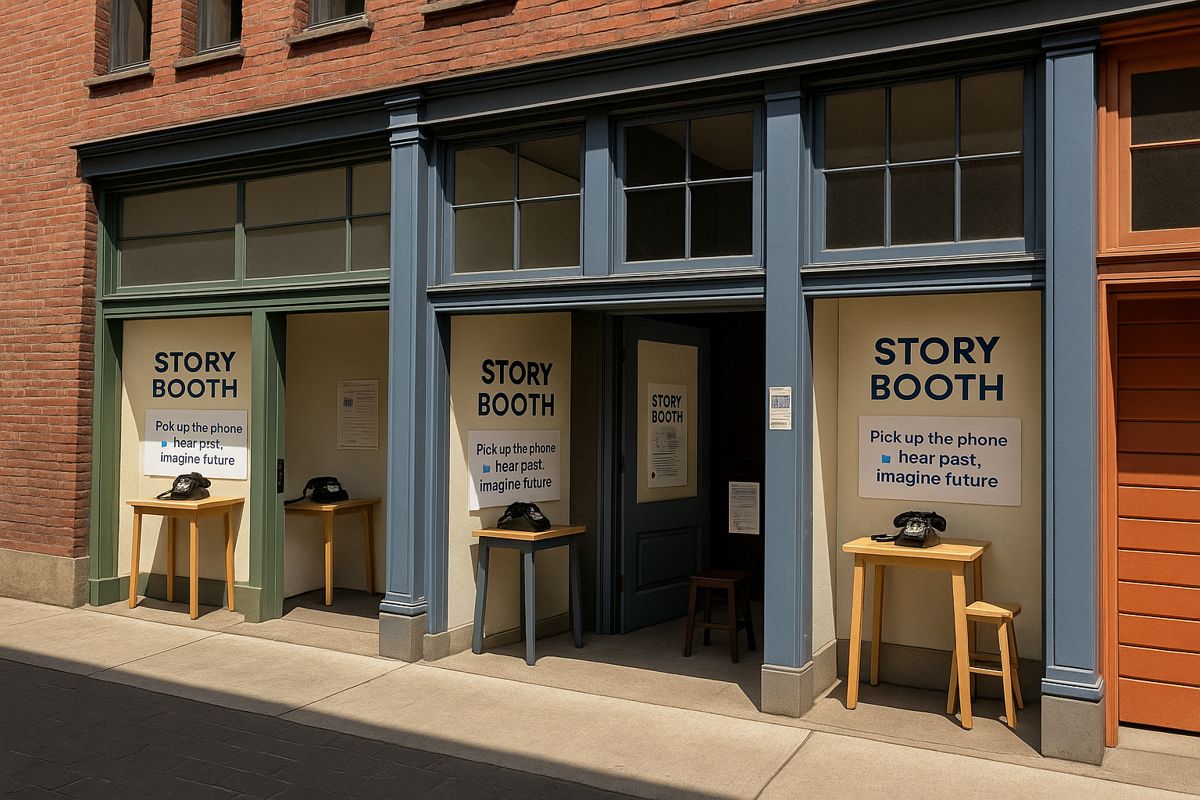
Guests step into the recessed doorway and spot a vintage rotary phone resting on a small table beside a laminated postcard-style prompt. The moment they lift the handset, a hidden DFPlayer Mini inside the phone plays a one-minute archival story of early Canton Alley. A gentle beep follows, inviting them to complete the bilingual mad-lib printed on the card. Speaking their chosen words and full sentences into the phone, they record a personal vision of the future. A pocket-sized digital voice recorder tucked beneath the table captures the audio automatically and stops when the handset is returned. Visitors walk away having heard the past, voiced the future, and contributed a unique clip that staff later upload to a shared gallery.
Engagement levels
| Level 1: Good | Level 2: Better Highlighted in the plan | Level 3: Best |
|---|---|---|
|
|
|
Staffing: One staff member per story booth.
Work plan
| Framework | UW |
|---|---|
|
|
Supplies
- 3 comfortable chairs for guests
- 3 side tables (preferably vintage)
- Gaffer tape
- Double-sided tape
- Hot glue
- Sanitizing wipes
- Pens and markers
- Mad-lib prompts
- 1-watt mini speaker that fits inside the rotary phone
- Battery
- Microphone
- Signage described above
Open question: Translations available?
3 Color the Future
Guest journey
Guests enter the opportunity site and see a blank canvas with the prompt “Someday this site could be…” Each guest adds to the vision of the future, showing what they imagine for their community. The prompts place guests in the shoes of a future community member engaged with the site.
Engagement levels
| Level 1: Good | Level 2: Better | Level 3: Best |
|---|---|---|
|
|
|
Staffing: Two staff members.
Work plan
| Framework | UW |
|---|---|
|
|
Supplies
- 2 six-foot folding tables (rental)
- Butcher paper
- Paint pens
- Box of 2-inch binder clips
- Trash bin
- Wet wipes
- Sandbags and mounting supplies for the plywood
Note: Archive the public art piece for Wing Luke’s future use.
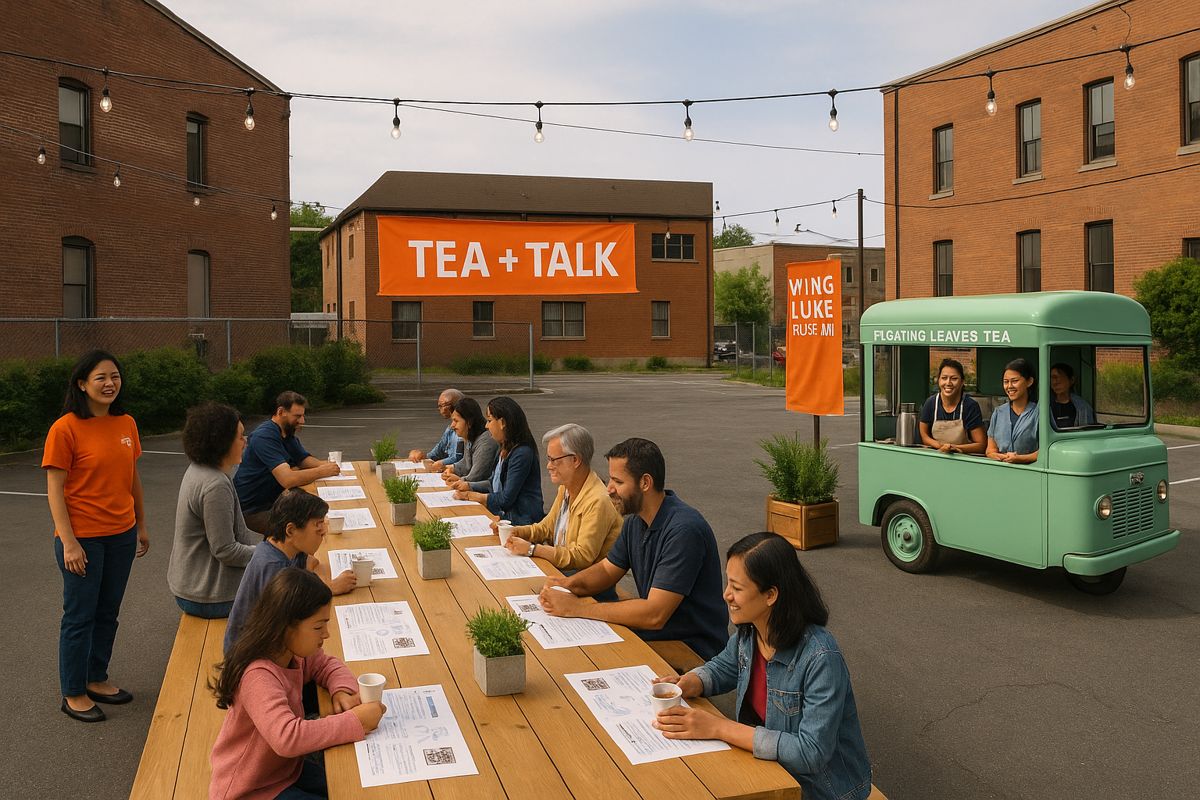
4 Tea + Talk
Guest journey
Guests are welcomed with a free cup of locally sourced tea, take a seat at placemat-lined tables, and join facilitated conversations about the future of the Eng Homestead site. Each placemat carries playful prompts, space to sketch ideas, and a QR code that opens a short survey.
Engagement levels
| Level 1: Good | Level 2: Better | Level 3: Best |
|---|---|---|
|
|
|
Staffing: Two staff members.
Work plan
| Framework | UW |
|---|---|
|
|
Supplies
- 6 foldable tables
- 6 red tablecloths
- 18 foldable chairs
- 2 trash and compost bins
5 Sprout the Dream
Guest journey
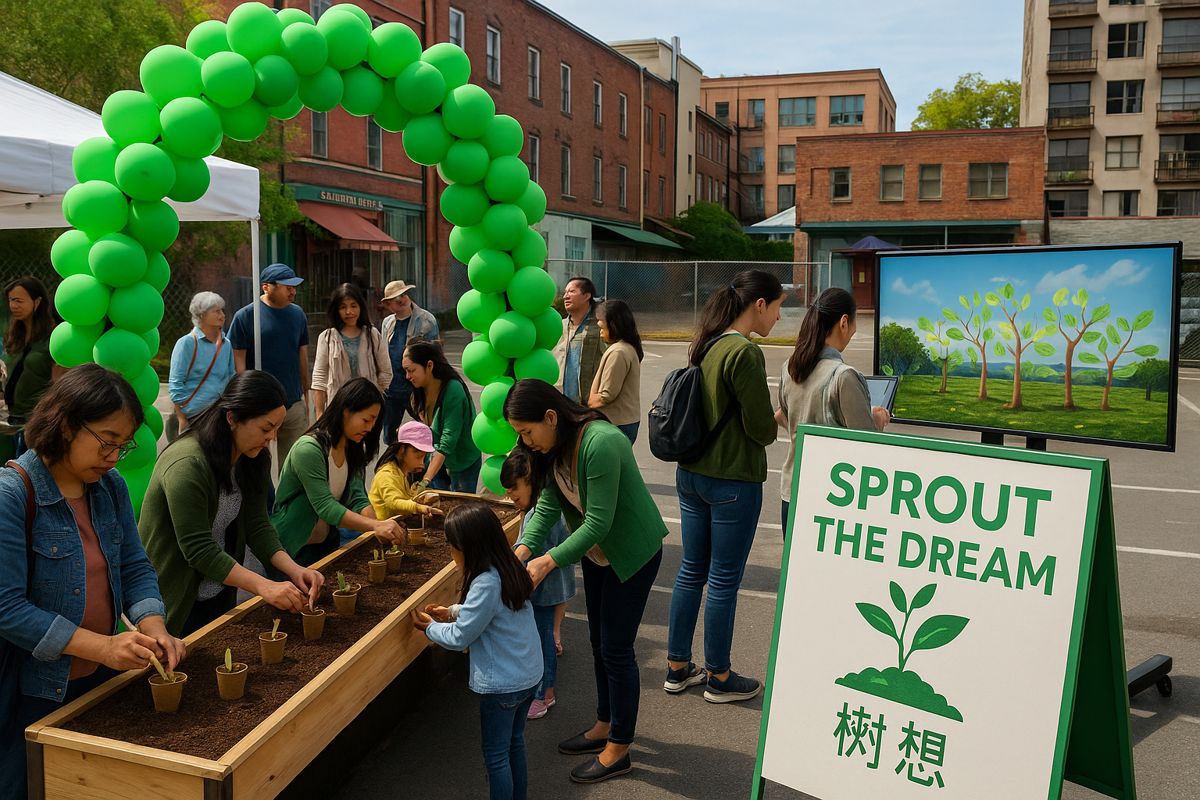
An interactive planting and AR activation where guests “plant” their hopes for the next 100 years of Wing Luke and the CID. Participants sow real bean seeds in biodegradable pots and “plant” a digital seed by scanning a trigger with an iPad.
Engagement levels
| Level 1: Good | Level 2: Better | Level 3: Best |
|---|---|---|
|
|
|
Staffing: Two or three staff members.
Work plan
| Framework | UW |
|---|---|
|
|
Tech stack: Adobe Aero for the AR experience.
Supplies
- 4 to 6 iPads
- Grown bean sprouts
- 2 six-foot foldable tables
- A container for the dirt
- Water
- Beans to plant
- Informational card on how to grow a beanstalk
Note: If possible, integrate the theme of the bean sprout as a provider for the family and the surrounding community.
What the museum needs to provide
| Activation | Item and quantity | Description | Due |
|---|---|---|---|
| Story Booths | Tables and chairs | Ideally comfortable seating for listening to audio stories. Plush, old-style furniture preferred. | 5/23 |
| Sprout the Dream | Audio of the bean sprout business history | An audio story about how the Eng Homestead came to be, its significance to the community, and the larger theme of providing for the family and envisioning a better life. | 5/20 |
| Story Alley | 4 audio stories | About three minutes each. | 5/20 |
| Story Alley | 4–5 photographs for stenciling | Historic photos of the Eng Homestead and the CID. | 5/20 |
| Story Booths | 3 audio stories | Two to five minutes each, generally about what life was like in the CID in the past; different from the Story Alley stories. | 5/20 |
| Color the Future | Historic images of the opportunity site and the Eng Homestead | 5/20 | |
| Tea + Talk | Food and tea | Procurement. |
The case study covers my role, who did what, and how the event came together on the day.
Back to the case study